The GP7 Cinema case study behind "My Grandfather Stanislau": fast-paced production, regional identity, and national reach
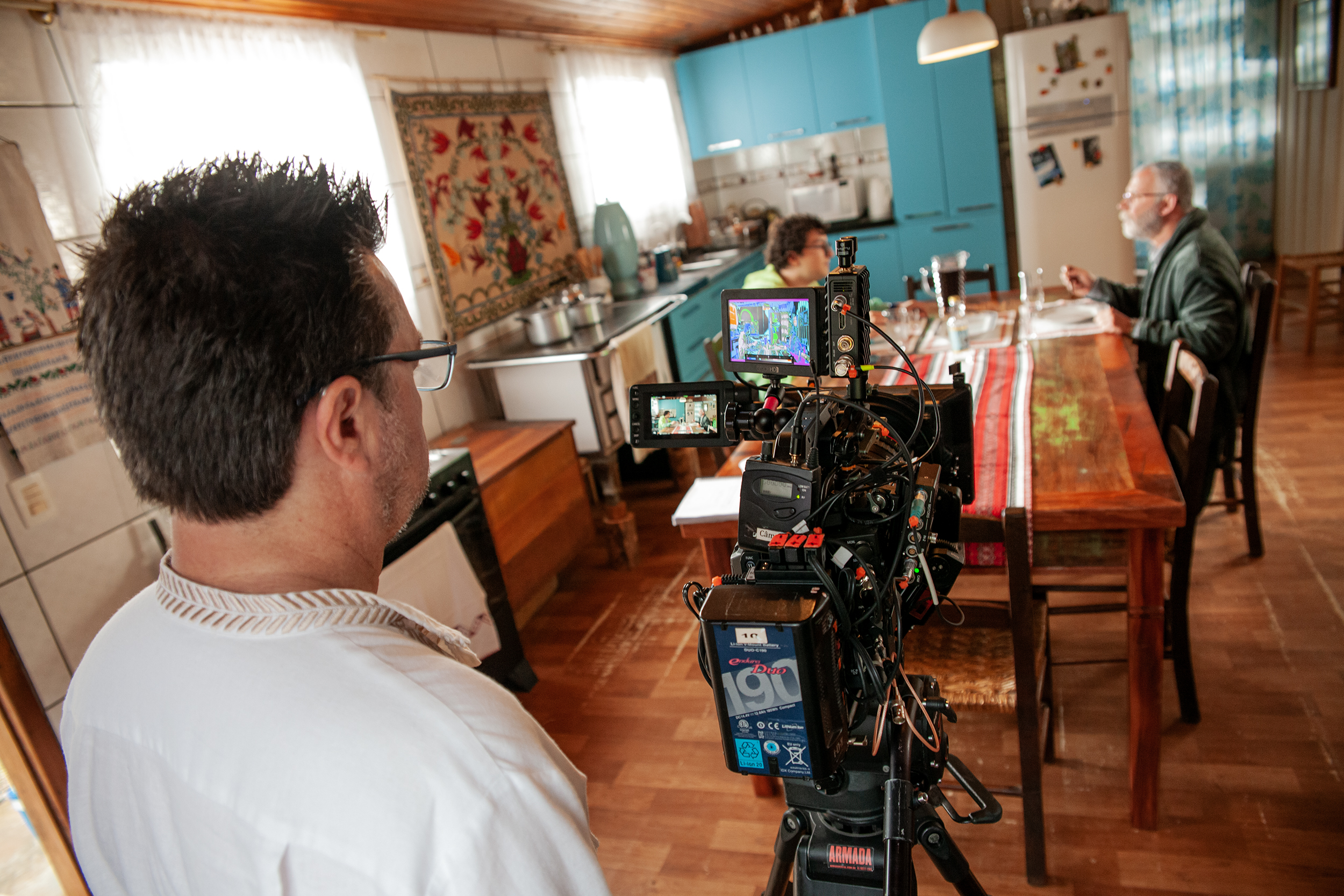
Behind the more than 16.6 million Brazilians reached during the national premiere of *Meu Avô Stanislau* on TV Globo—and its subsequent rise to the top of the Globoplay movie charts—lies a production story as unique as the narrative unfolding on screen.
Co-produced by GP7 Cinema, TV Globo, and RPC, the TV movie was conceived, developed, produced, completed, and delivered in just seven months—a timeline considered exceptional by Brazilian audiovisual industry standards, where a feature film typically takes about two years from development to release.
Filmed entirely in Prudentópolis, in the interior of Paraná—a municipality known for its strong Slavic and Ukrainian heritage— *My Grandfather Stanislau* tells the story of Bóris, a teenager hyperconnected to the digital world who, upon being sent to spend time with his grandfather in the countryside, embarks on a journey to reconnect with his family, his community, and his own roots.
For Guto Pasko, the TV movie’s producer and director, the project also carries a personal dimension.
“The TV movie shows a different Brazil—a foreign Brazil, a Brazil ‘Made in Paraná.’ Filming in Prudentópolis was, in a way, also a way of portraying the history of my ancestors, since my family came from Ukraine in 1896 and helped found the municipality.”
In addition to the creative challenge, the production required a highly complex industrial operation.
“We had only seven months to complete the entire process—from the initial idea to the script, through pre-production, filming, post-production, and delivery for national broadcast. This underscores GP7 Cinema’s maturity and ability to deliver for major market players from Curitiba,” adds Pasko.
Producer Andréia Kaláboa, a partner at GP7 Cinema and a native of Prudentópolis, highlights the emotional aspect of the production.
“The film is about a grandson who disconnects from social media to reconnect with his grandfather and his grandfather’s community. For me, filming in my hometown, with so many people from the community, was also a return to my roots.”
Screenwriter Gil Marcel Cordeiro explains that the story was born from the desire to bring together family affection and a sense of community.
“My desire was to bring together two layers of affection: the relationship between grandfather and grandson and that sense of community that embraces those who live around them.”
Through his cinematography, João Castelo Branco transformed the natural landscapes of Prudentópolis into an essential part of the narrative.
“The challenge was to visually convey the tenderness of this affectionate relationship between grandfather and grandson within the lush landscape of a Slavic immigrant settlement.”
The visual construction of the film’s world also required in-depth art direction research. For Isabelle Bittencourt, the goal was to ensure authenticity. “Accurately depicting houses, objects, and clothing required a deep immersion in the culture of these peoples. The big Ukrainian celebration at the end was one of the biggest challenges.”
The original soundtrack followed the same path of cultural research. Composers Lilian Nakahodo and Grace Torres incorporated traditional instruments such as the bandura and bayan, seeking to musically convey the identity of that community.
The experience also left a deep impression on the cast. Fhelipe Gomes, who plays Boris, sums up the essence of the work:
“When one generation listens to another, time ceases to be a divider and becomes a bridge. And that’s when we learn that connection isn’t about technology—it’s about humanity.”
Ranieri Gonzalez, who plays Stanislau, highlights the experience of immersing himself in that community: “Being part of that environment, surrounded by real people from Prudentópolis, is what made the magic happen.”
Actress Laura Haddad emphasizes the cultural dimension of the film: “Being part of this film meant bringing Ukrainian culture in Paraná to life and honoring the power of the memories of a community so important to our state.”
Featuring local artists, community members, folk groups, and a technical crew composed mostly of people from Paraná, “My Grandfather Stanislau” became more than just a TV movie: it evolved into a sensitive portrait of Brazilian cultural diversity and a concrete example of how audiovisual productions created outside major urban centers can combine regional identity, artistic excellence, and national reach.
For GP7 Cinema, the behind-the-scenes story of *Meu Avô Stanislau* confirms something built over the course of its 25-year history: the ability to transform local stories into content with national relevance, ready to engage millions of viewers across any viewing platform.