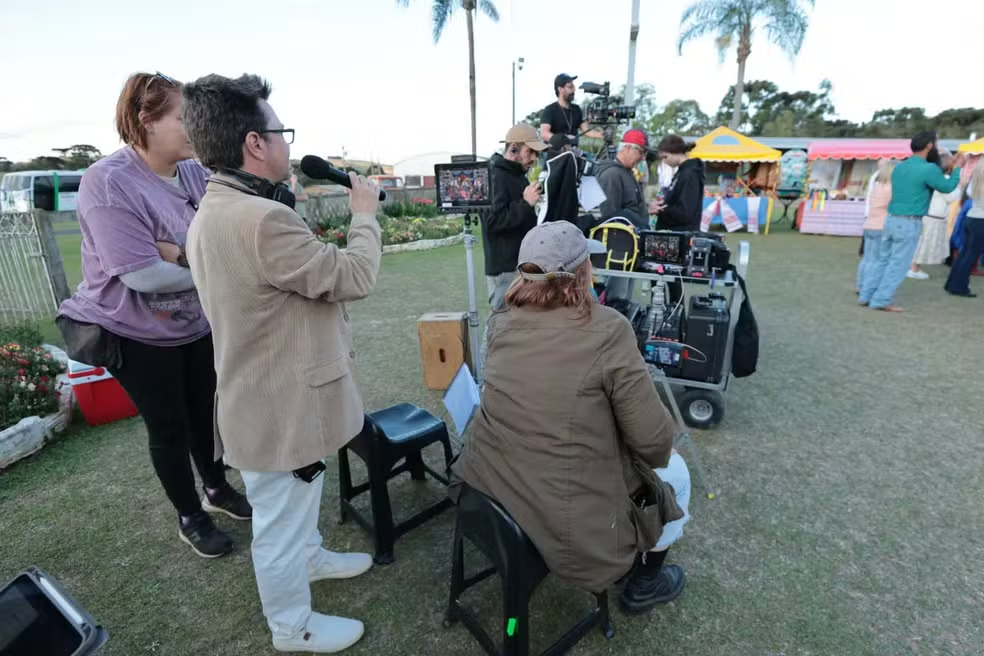
G1 published an article analyzing the audiovisual industry in Paraná, of which the production company GP7 Cinema is a part.
The article highlights two of the production company’s works directed by Guto Pasko that have garnered significant recent attention: the feature-length fiction film *ENTRELINHAS*, available on Prime Video & Amazon MGM Studios and on the AMC channel, and the fiction TV movie *MEU AVÔ STANISLAU*, produced for Globo’s *Tela Quente* and currently available on Globoplay, as part of a co-production partnership between GP7 Cinema Ltda, Globo, and RPC (Globo’s affiliate in Paraná).
Below is the full article taken from the G1 website:
Paraná’s audiovisual industry drives the economy by showcasing the state’s stories to the world.
Ana Beatriz Fortes, a native of Paraná, never imagined that one day she would see her own life portrayed on the big screen. At 75, while watching the film “Entrelinhas,” her heart raced as she revisited the period when she was imprisoned and tortured by mistake during the dictatorship.
In the feature film, the character Beatriz—inspired by Fortes—is accused of being involved with subversive student movements and a guerrilla group during the period of repression. The young woman is subjected to torture and violent interrogations to force her to admit involvement in these organizations, even though she was not a member of them.
The production, with its Paraná roots, is just one of several that make up an ecosystem that helps tell the story of Paraná and, consequently, boosts the state’s economy through the art of cinema.
For Ana Beatriz, watching the film was a kind of “catharsis,” a “settling of accounts” with traumatic feelings that had haunted her for more than 55 years, as she describes it.
“Every region of our vast Brazilian territory has its own unique traits and characteristics that deserve to be observed and translated into art. In my case, which recounts a sad event in our history, I consider it essential that the younger generations in Paraná know that shameful and brutal acts committed by the Brazilian Army also took place here—and that these stories must be told so they are never repeated,” she argues.
/i.s3.glbimg.com/v1/AUTH_59edd422c0c84a879bd37670ae4f538a/internal_photos/bs/2026/9/y/FKuwnsQV6lbZL4vqVp8g/captura-de-tela-2026-06-22-162353.png)
Ana Beatriz Fortes’ story was portrayed in *Entrelinhas* — Photo: GP7 Cinema
Like *Entrelinhas*, 67 films from Paraná were commercially released between 2009 and 2025. Together, these works reached an audience of more than 219,000 viewers and generated R$2.22 million in box office revenue, according to a study conducted by the Brazilian Micro and Small Business Support Service (Sebrae/PR) in partnership with the Paraná State Secretariat of Culture (SEEC).
Among the films produced in the state during this period, fiction films stood out, with 42 titles. They were followed by documentaries, with 23 titles, and animated films, with two productions.
In general, these works have one thing in common: they address and depict Paraná in some way, but they also connect with broader themes, allowing them to be appreciated by people outside the state as well.
Released in 2026, “My Grandfather Stanislau” embodies this approach. As the film follows the story of a young man sent to spend a few days in rural Paraná with his grandfather—the leader of a Ukrainian community—viewers are introduced to the landscapes and customs of Paraná.
However, anyone can relate to the film as it reveals the clash between the digital world and traditions, giving rise to a story about family relationships, belonging, and connection.
“The challenge was to understand how to be both national and regional at the same time. So, here at RPC, we drew on all our knowledge of Paraná—together with the team at [production company] GP7—to accurately represent our state in a production shown nationwide. We addressed a universal theme—the multigenerational relationship between grandfather and grandson—in an affectionate way, as is typical in our small towns. And with landscapes and elements that constantly evoke the countryside of Paraná. “It was a mix that proved to be a huge success,” says Marcelo Dias Lopes, RPC’s Director of Programming.
According to Guto Pasko, director of both films, both “Entrelinhas” and “Meu Avô Stanislau” demonstrate that the state of Paraná has a well-established production capacity, which opens up new opportunities for the audiovisual industry in the region.
“Every film produced here is showcasing the image, culture, and history of the state of Paraná, not only to Brazil but also to the rest of the world […]. People from Paraná want to see themselves. Brazilians want to see themselves on screen. We just need to have opportunities,” says Guto.
A Paraná for Every Story
The strength and productivity of Paraná’s audiovisual industry also attract market players and clients from other regions.
Luiz Gustavo Vilela, executive secretary of the PrFilm Commission, points out that this interest stems from the technical qualities of the infrastructure that facilitate this collaboration, such as, for example, high-quality courses and universities offering programs focused on audiovisual production and related fields, a well-developed network of airports, and relative proximity to São Paulo and Rio de Janeiro, all at lower costs.
/i.s3.glbimg.com/v1/AUTH_59edd422c0c84a879bd37670ae4f538a/internal_photos/bs/2022/r/4/Dj4wL6QamDgYHdnVDYog/filme-marucio-de-sousa-lapa-1.jpeg)
Filming in the historic center of Lapa for the 2022 film by Maurício de Sousa, creator of *Turma da Mônica* — Photo: Miguel Eduardo Dawagi dos Santos
Furthermore, according to Vilela, the state has the advantage of a diverse natural and urban landscape, which can suit a variety of different projects.
"There is no other state in Brazil that combines all these characteristics. From an urban perspective, it’s very interesting because the cities have undergone different waves of urbanization over the past 300 years. We have modernism, we have brutalism, we have classical architecture… We can emulate practically all of Latin America,” he explains.
The executive secretary believes that this diversity and technical expertise make Paraná fertile ground for attracting productions and investments—as well as for telling its own stories.
In this regard, five cities stand out as the main regional hubs for Paraná’s audiovisual industry: Curitiba, Londrina, Maringá, Ponta Grossa, and Foz do Iguaçu.
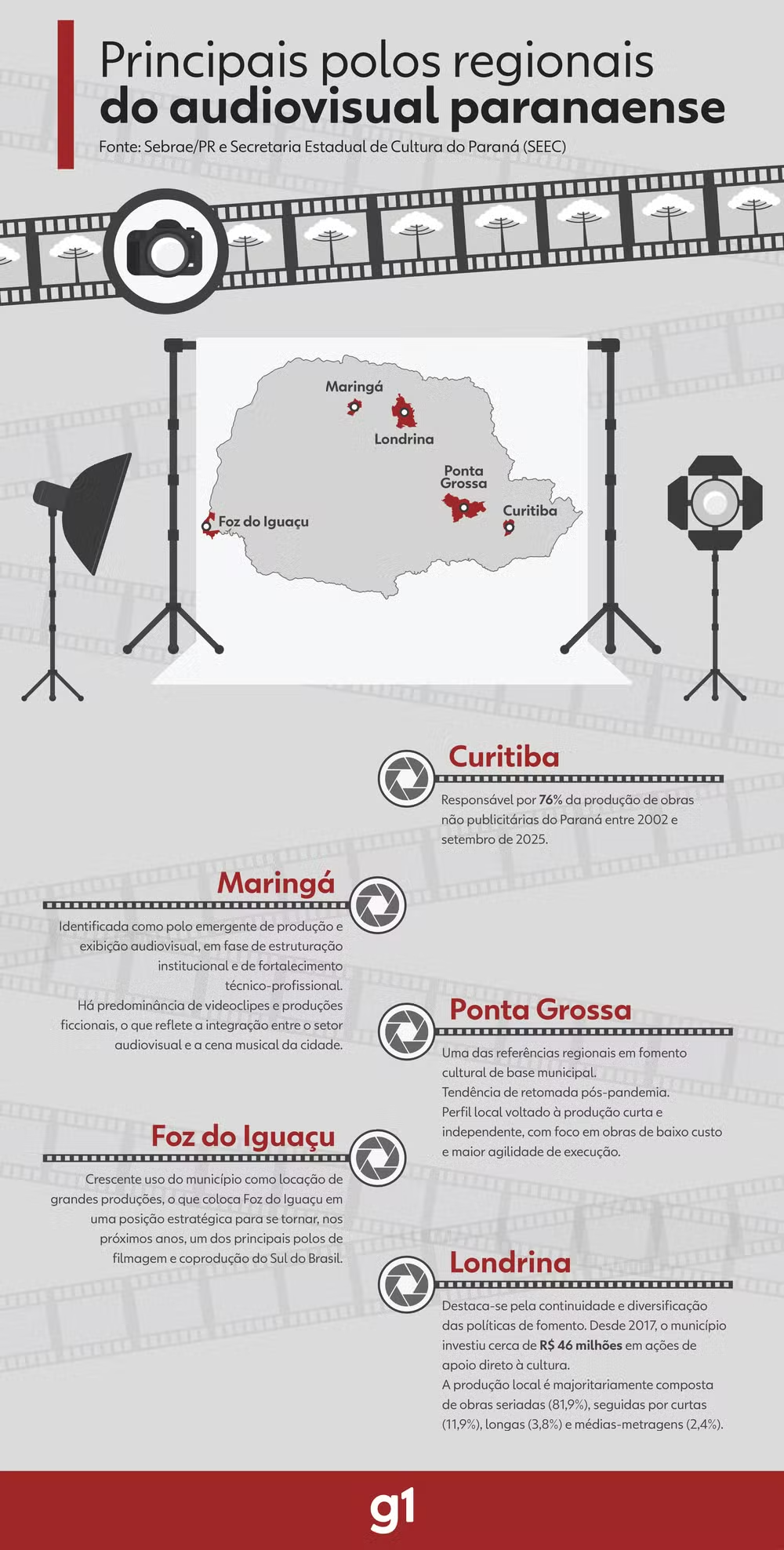
Cities stand out as the main regional hubs for Paraná’s audiovisual industry — Photo: Fabio Furtado/RPC
It takes a village to make a movie
In Paraná, 29.3% of registered companies in the audiovisual sector have at least one employee hired under a CLT contract. However, according to Luiz Gustavo Vilela, executive secretary of the PrFilm Commission, in most productions, the majority of the workforce is hired on a temporary basis.
He points out that, for projects produced in the state, production companies prioritize professionals from Paraná.
This was the case with the film “Nova Éden,” directed by Aly Muritiba. The filming of the movie, shot primarily in Paraná, directly involved about 150 people. When suppliers are also taken into account, the number of people involved exceeds 300.
In a major production like this, the work begins long before filming starts and extends well beyond its completion. Roles range from the person who conducts research to select potential filming locations to the person who transports the actors around the set.
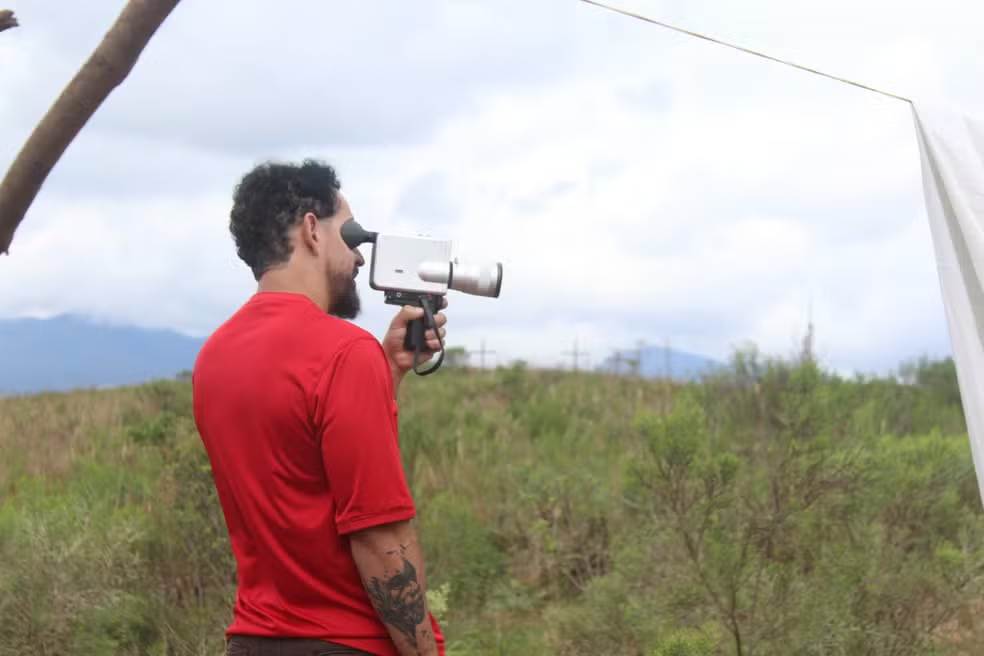
Aly Muritiba, director of *Nova Éden* — Photo: Mariah Colombo/g1
The audiovisual production chain consists of six stages: development (or planning), pre-production, production, post-production, distribution, and exhibition.
When a film is made in Paraná, the impact on the local economy is considerable. Nova Éden alone generated at least R$15 million for the Paraná economy. According to the director, these figures extend beyond the audiovisual market.
“It creates jobs, generates income, and gets money circulating in the economy—not just in the cultural sector. With a production of this size, you rent vans, tents, booths, catering services, lodging, and gas stations. You get the money flowing,” argues Muritiba.
A 2020 report by the specialized consulting firm Olsberg SPI found that global audiovisual spending in 2019 was estimated at US$ 177 billion, but when indirect and induced effects are taken into account, the total economic impact reached US$414 billion.
This is because, for every dollar invested directly in the sector, more than two additional dollars are generated in different areas of the economy, according to the report. By 2024, global spending on the audiovisual sector is estimated to reach US$ 247 billion.
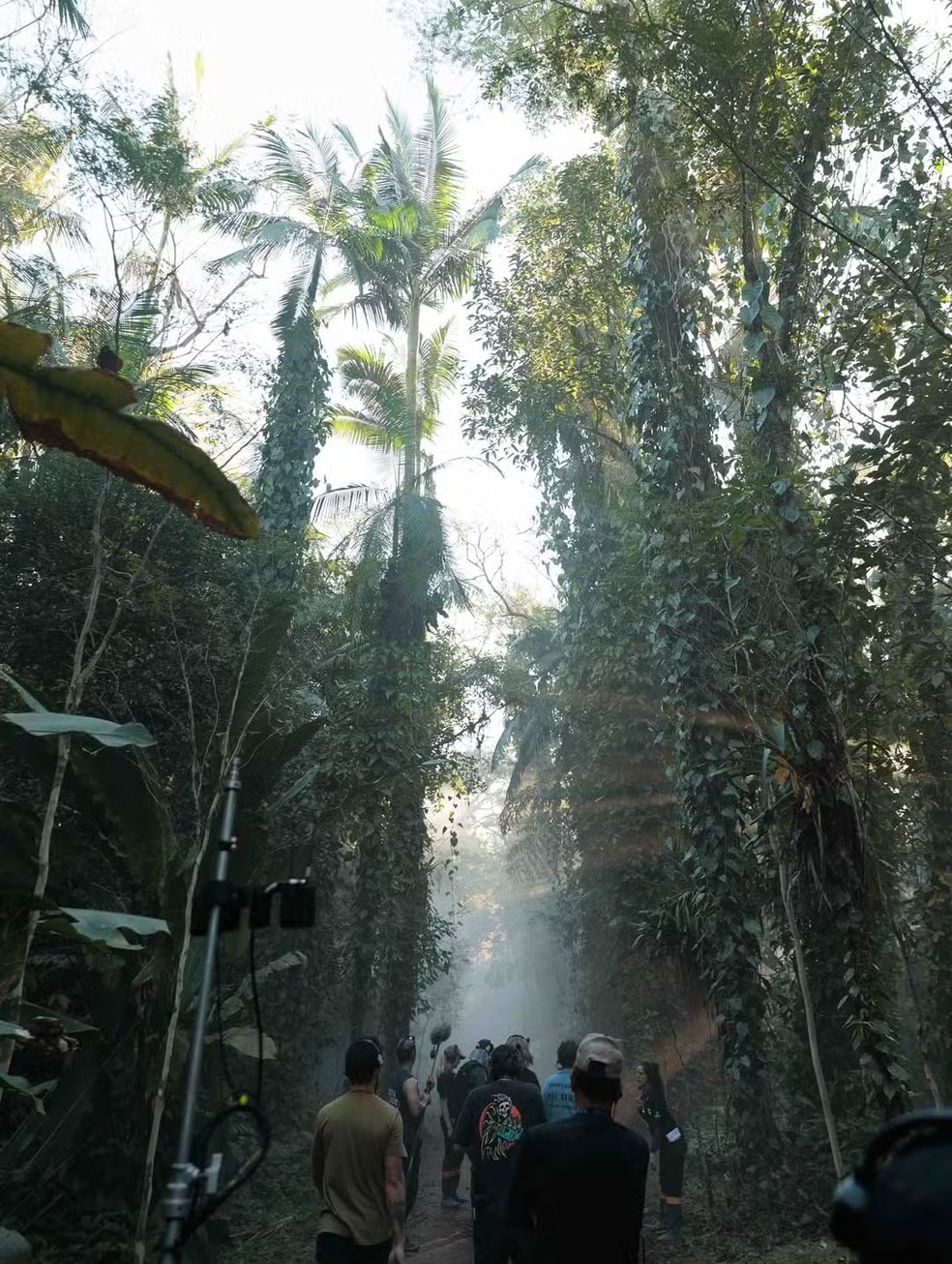
Behind-the-scenes footage from the filming of the movie *Nova Éden*, directed by Aly Muritiba — Photo: Leticia Futata/Courtesy of Olhar Filmes
A Growing Market
The industry’s growth in the state has even led people from outside the field to seek roles in the audiovisual sector.
This is the case for Ales de Lara, who holds a degree in biology. She left her career as a teacher, and, little by little, her affinity for cinema led her to dedicate herself to the audiovisual industry, which is now her main line of work.
Ales is a director of horror short films, a screenwriter, a special effects makeup artist, and a practical effects artist. For her, her background in biology still contributes to her work in film by providing a different perspective.
“Makeup and special effects require knowledge of anatomy—knowledge I have thanks to biology. When we talk about blood, we need to understand the difference between arterial and venous blood. When we talk about wounds, we need to understand healing times and the changes that occur in them over time. […] You have to understand these changes to make the makeup believable,” she explains.
After her radical career change, Ales sought to deepen her knowledge in her new field, earning a graduate degree in Film and completing other specialized courses.
Paraná has 35 undergraduate programs—including bachelor’s and technical degrees—focused on the audiovisual field. Of these, only three are offered by public higher education institutions, and only two are tuition-free.
According to Sebrae, 57.4% of professionals working in the field have completed high school, 29.5% hold a college degree, and 10.4% have only completed elementary school.
A Long-Standing Tradition, a National Benchmark
Paraná’s expertise in the audiovisual field is nothing new. It was in 1897, at the former Theatro Hauer, that the Faure Nicolay variety troupe presented a moving-image show for the first time.
There, just a few years after the Lumière brothers’ pioneering presentation in Paris in December 1895, the state’s relationship with the seventh art was born.
According to the Museum of Image and Sound (MIS), by the 1930s, three Curitiba natives created works that were genuinely representative of Paraná: Annibal Requião (1875–1929), João Baptista Groff (1897–1970), and Arthur Rogge.
Since then, the local film and television industry has gone through various phases and experimented with different styles. Along the way, in 1975, the Curitiba Film Archive was founded.
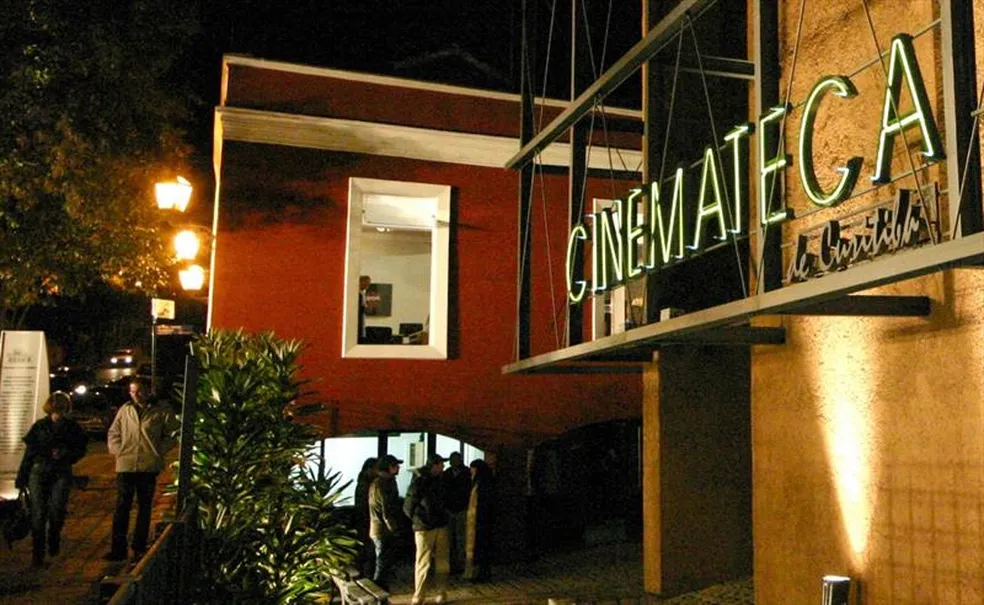
The Curitiba Film Archive was founded in 1975 — Photo: Curitiba City Hall/Publicity
The sector’s development has grown to the point where, today, Paraná is on the global film map.
In this context, since 2012, the state has hosted one of Brazil’s largest film festivals: Olhar de Cinema.
The event’s program features more than 80 films. Some of them are screened as part of the “Mirada Paranaense” section, dedicated to presenting the public with an overview of local audiovisual production.
“From the very first minute of the festival, this has always been a section that was part of our identity, because we strongly believed that a festival needs to be connected to the place where it’s held, to its community—precisely because we strongly believed in a festival’s potential to promote films,” explains Antonio Gonçalves Junior, founder and director of Olhar de Cinema, who also highlights how the showcase has uncovered talent over the years.
The festival is not limited to local connections and careful curation. Established as one of the industry’s leading events in the country, Olhar de Cinema features the Independent Film Market (MECI), considered a space for networking, business, and professional development geared toward Brazilian and international audiovisual professionals.
Through panels, masterclasses, pitch sessions, case studies, and networking sessions, the Independent Film Market connects stakeholders across the audiovisual production chain.
“MECI has taken a major step forward in this direction by facilitating and driving connections among people, always with the market in mind, fostering co-productions, sales, and partnerships… Films have an artistic side, but they are also products that can be monetized, that can generate revenue, that can create jobs, and that can generate income,” he argues.
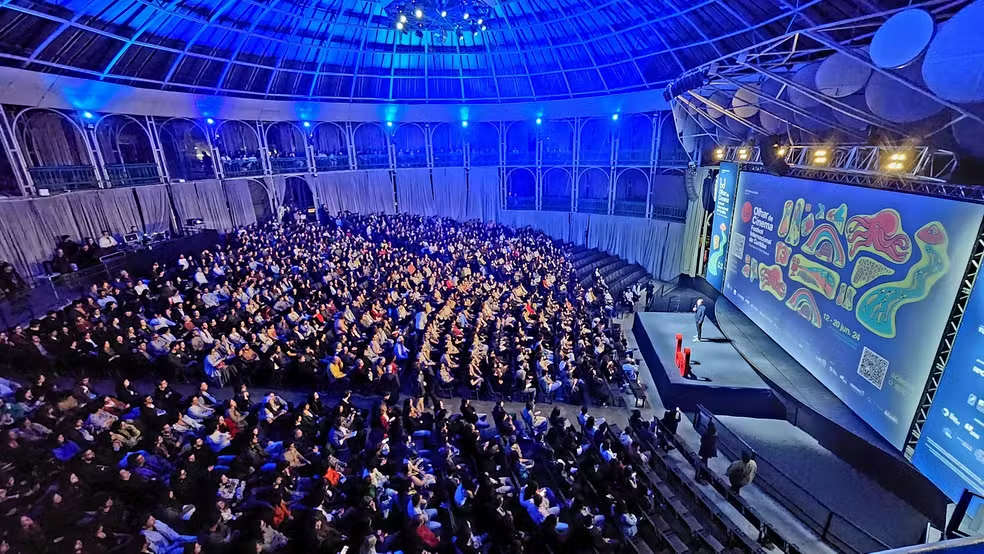
Olhar de Cinema was founded in Paraná and is one of Brazil’s largest film festivals — Photo: Tip Mídia
Despite the growth of the audiovisual industry in the state and efforts to ensure that Paraná residents see themselves on the big screen, the number of movie theaters in the state is moving in the opposite direction.
According to data from the National Film Agency (Ancine), across all of Paraná, only 34 cities have movie theaters, representing 8.5% of the state. If residents of the other 365 municipalities want to see a movie in a theater, they must travel to other cities—often covering long distances.
On the Other Side of the Big Screen
Despite the growth of the audiovisual industry in the state and efforts to ensure that Paraná residents see themselves on the big screen, the number of movie theaters in the state runs counter to this trend. According to data from the National Film Agency (Ancine), across all of Paraná, only 34 cities have movie theaters, representing 8.5% of the state. If residents of the other 365 municipalities want to see a movie in a theater, they must travel to other cities—often covering long distances.
Among Paraná’s cities, Curitiba has the highest concentration of cultural venues dedicated to film screenings. The state capital currently has 21 operating movie theater complexes, with a total of 95 screens, according to Ancine.
In 2024, attendance at Curitiba’s movie theaters totaled 3.21 million viewers, with 392 titles screened. This represents an increase of 170,638 people compared to 2023, or 5.6%. In 2019, total attendance was 4.2 million, representing a 24.1% decline by 2024.
Among movie theatergoers in Curitiba, 92% watched foreign films, while only 8% watched Brazilian productions. The low public demand for these films still poses a challenge for the local industry.
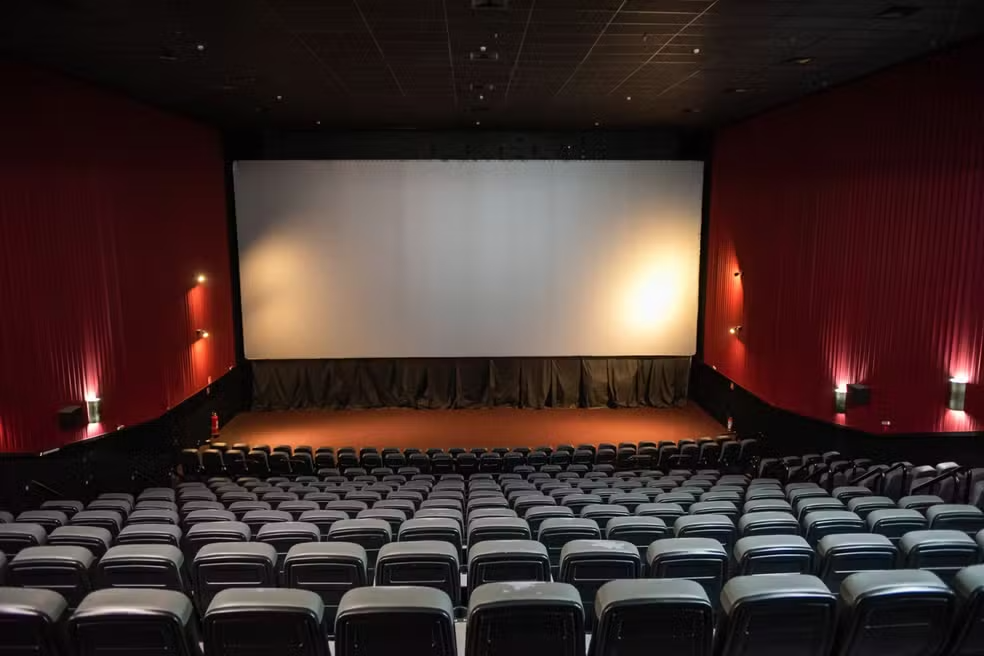
Across all of Paraná, only 34 cities have movie theaters, according to Ancine — Photo: Courtesy of Limeira Shopping
The screen quota for Brazilian films—which requires movie theaters in Brazil to set aside a minimum proportion of their annual screenings for Brazilian productions—is cited as one possible way to bridge this gap.
In Paraná, initiatives linked to the state government have taken on the task of bringing cinematic entertainment and providing free access to culture for audiences in rural municipalities that lack commercial movie theaters.
The “Cinema na Praça” program, for example, screened films in 144 municipalities across the state in 2024.
Strengthening decentralization, combined with the creation of a network of public movie theaters, are possible ways to address this challenge. In the city of Curitiba, Cine Passeio features screenings of Brazilian and international films, selected by a specialized curatorial team. According to city officials, approximately 600 people visit the venue daily.
The cultural complex, which opened in 2019, is housed in a historic building. The venue’s operation has helped revitalize the downtown area of the capital of Paraná.
Under the same administration and curatorship, Cine Guarani is another cinema operated by the Curitiba City Government, located outside the downtown area, near the Portão neighborhood terminal.
In Luiz Gustavo Vilela’s view, the key to bringing audiences closer to national productions lies in fostering a sense of recognition and belonging with what is shown on screen.
“It’s essential that both the films reach their audience and that the audience be able to find this cinema […] People from Paraná need to learn to see themselves; we need to hear our own accent,” he concludes.
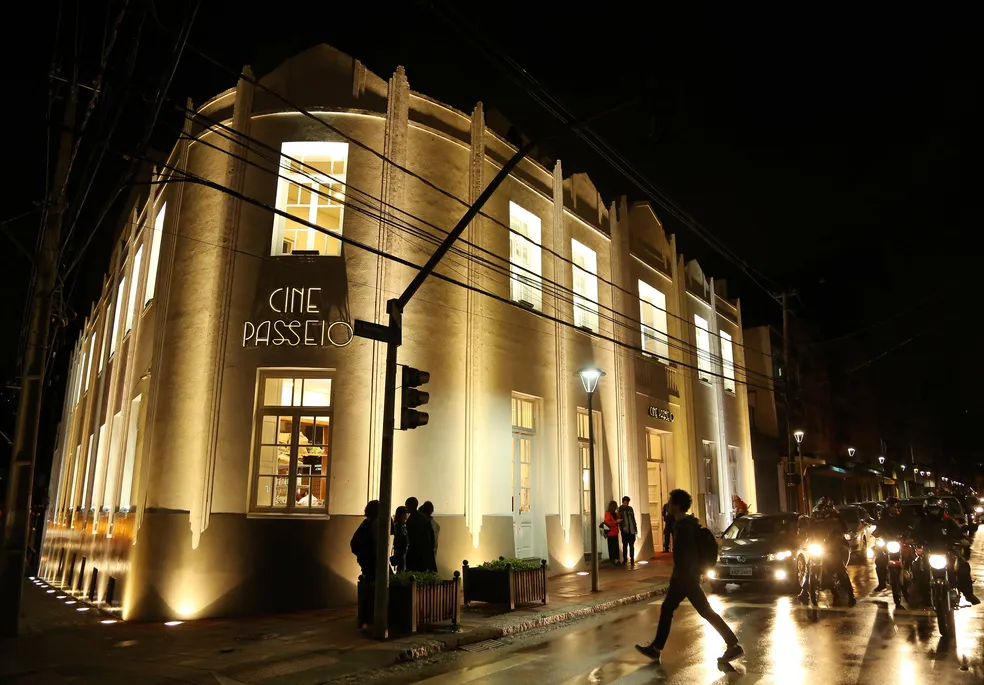
Cine Passeio offers film screenings in two theaters,
reviving the culture of Curitiba’s street-side movie theaters — Photo: Giuliano Gomes/PRPress
The full article can be found at: https://g1.globo.com/pr/parana/noticia/2026/06/24/raiox-industria-audiovisual-do-parana.ghtml accessed on: 06/25/2026